
The Fake Goods Epidemic Has Escaped the Luxury Aisle. No Product Is Safe
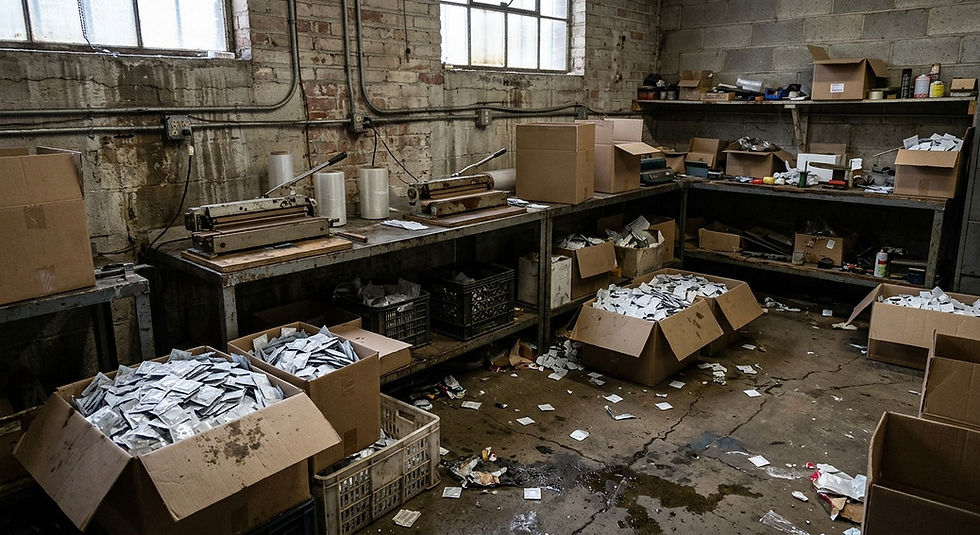
When most people think of counterfeit goods, they immediately think of luxury items such as imitation high-end watches, replica designer handbags, or fake jewellery made of real gold. People often see these items as affordable alternatives to luxury goods and as status symbols that don't directly affect others.
But there’s a much more serious issue: counterfeiters have moved beyond just luxury items and are now churning out fake versions of everyday products, medical devices, and common consumer goods.
You might be unknowingly buying knock-offs of items that you use every day, which can have alarming consequences. This shift brings with it significant health risks, economic fallout, and challenges for companies trying to protect their brands.
Items You Never Expected to Be Fake
While designer fakes still grab headlines, the underground market has shifted toward cheaper, high-demand products that people usually don’t scrutinize closely. According to reports from the OECD and EUIPO, the global counterfeit trade is now worth over $500 billion a year, with a growing portion coming from items that pose direct threats to human health.

Tobacco products are heavily taxed worldwide, which creates a huge profit potential for black-market operations. Fake cigarettes are often made in unregulated, unsanitary conditions and can contain harmful substances like heavy metals, mold, and other contaminants. The World Health Organization estimates that one in ten cigarettes smoked around the world is illegal, and in some places, that number is even higher. These counterfeit products are not only harmful but also undermine public health initiatives, deprive governments of tax revenue, and often support organized crime
Perhaps one of the most chilling categories of counterfeiting involves barrier contraceptives. Fake condoms are packaged to look almost the same as leading global brands, and are frequently manufactured from cheap, low-grade latex or recycled rubber. They lack proper strength testing and lubrication quality, making fake condoms prone to tearing or leaking. Consumers purchasing these items to protect their health are unknowingly exposing themselves to high risks of unintended pregnancies and sexually transmitted infections (STIs).

Health agencies across Africa, Asia, Europe, and Latin America have repeatedly intercepted massive shipments of fake condoms, some bearing the logos of internationally recognized brands, destined for clinics, pharmacies, and government distribution programs. In several documented cases, the counterfeit products were found to have failure rates many times higher than legitimate products, effectively offering no protection at all. The psychological dimension is equally troubling, as individuals who believe they are practicing safe sex may unknowingly abandon other precautions, compounding their risk. For public health systems already stretched thin, the influx of fake contraceptives represents a direct assault on decades of progress in sexual health education and disease prevention.
Contact lenses are medical devices that sit directly on the cornea, requiring precise manufacturing standards to ensure proper oxygen permeability and sterility. Counterfeit colored or corrective lenses, frequently sold online, via social media, or in unregulated beauty shops, are often produced in filthy conditions using low-grade plastic pigments that can leach toxic dyes directly into the eye. Wearing them can lead to severe corneal ulcers, permanent vision impairment, and blinding eye infections.
The rise of cosmetic contact lenses, particularly colored lenses marketed through social media influencers and beauty retailers, has created a particularly dangerous gray market. Many consumers, especially younger buyers, are unaware that contact lenses are classified as medical devices in most jurisdictions and are subject to strict manufacturing and labeling requirements. Counterfeit versions bypass every one of those safeguards. Ophthalmologists report a growing number of emergency cases linked to fake lenses, including corneal abrasions, bacterial keratitis, and in severe cases, permanent scarring requiring corneal transplants. The allure of a cheap, fashionable accessory has blinded many consumers to the fact that they are inserting an unregulated foreign object directly onto one of the most sensitive tissues in the human body.
4. Counterfeit Pharmaceuticals and Supplements
Beyond the items already mentioned, one of the fastest-growing and most dangerous categories is counterfeit medication. Fake painkillers, antibiotics, antimalarials, and even cancer treatments have been found in legitimate supply chains across the globe. The WHO estimates that up to 1 in 10 medical products in low- and middle-income countries are substandard or falsified.

Some counterfeit drugs contain no active ingredient at all, while others contain toxic substitutes, such as antifreeze or industrial solvents, that can cause organ failure or death. Even more insidious are counterfeit supplements and vitamins, which often evade regulatory scrutiny because they are classified as food products rather than drugs. Consumers who want to improve their health might unknowingly take these unregulated substances, with no safety oversight.
5. Counterfeit Baby Formula and Food Products
Perhaps nothing illustrates the depravity of the counterfeit trade more starkly than the falsification of infant formula and staple foods. In recent years, authorities have uncovered operations producing fake baby formula with little to no nutritional value, sometimes containing melamine, industrial starches, or other harmful additives. Counterfeit olive oil, honey, rice, and spices are also rampant, often diluted with cheap fillers or colored with banned dyes. These products disproportionately affect vulnerable populations, infants, the elderly, and low-income families, who rely on affordable staples and have little recourse when those products fail them.
How Brands Are Fighting Back Against Counterfeit Goods
Everyday goods that are counterfeit pose significant threats to society, often causing brands to face unfair blame for the proliferation of fake products. However, brands can fight back by partnering with specialized intellectual property (IP) enforcement experts.
The challenge of combating counterfeit goods is immense. Counterfeiters operate across borders, exploiting legal loopholes and adapting more quickly than most regulatory frameworks can respond. A single raid on a factory in one country may merely shift production to another location. Online marketplaces are saturated with counterfeit listings, and takedown requests often take weeks to process, during which time sellers can vanish and reappear under new identities. Brands that once relied solely on in-house legal teams are now recognizing that effective enforcement against counterfeit goods requires specialized expertise, local knowledge, and a sustained on-the-ground presence in regions where counterfeiting thrives.
One prominent player leading the charge on the ground in Asia, a primary hub for counterfeit manufacturing operations, is the Selective Trademark Union (STU).
The Role of Specialized IP Enforcement
With decades of specialized experience in intellectual property rights enforcement across key Asian territories, STU provides comprehensive, boots-on-the-ground solutions designed to stop counterfeiting at its absolute source.
Rather than merely chasing listings on the internet, STU's approach targets the root of the illicit supply chain through several critical pillars:
- Deep On-the-Ground Investigations: STU utilizes sophisticated investigative techniques and local networks to unmask clandestine manufacturing operations, storage hubs, and distribution networks of counterfeit goods. This includes undercover surveillance, intelligence gathering, and the cultivation of informants within illicit supply chains.
- Law Enforcement Collaboration: STU coordinates directly with local authorities and law enforcement agencies to execute high-impact raids on illegal factories and warehouses, seizing and destroying millions of dollars worth of fake products before they reach global markets. These operations are planned months in advance with meticulous attention to legal procedures to ensure successful prosecutions.
- Continuous Surveillance: After a successful crackdown, STU maintains rigorous offline and online surveillance efforts to ensure that underground operators do not simply relocate and rebuild their counterfeit networks. This long-term approach prevents the whack-a-mole dynamic that undermines so many anti-counterfeiting enforcement efforts.
- Customs Cooperation: By training and working alongside customs officials at major transit points, STU helps intercept illegal shipments at borders before they can infiltrate international supply chains. This proactive approach saves brands millions in downstream enforcement costs and prevents hazardous counterfeit products from ever reaching consumers.
- Brand Protection Strategy: Beyond enforcement, STU collaborates with brands to develop comprehensive brand protection strategies, including authentication technologies, supply chain audits, and consumer education campaigns that address counterfeiting from multiple angles.
- Cross-Border Coordination: Because counterfeiting networks operate across multiple jurisdictions, STU facilitates coordination between enforcement agencies in different countries, ensuring that a raid in one territory is synchronized with actions in others. This dismantles entire networks rather than targeting isolated nodes.
Global brands across industries, from cosmetics and apparel to machinery and medical-adjacent consumables, can protect their intellectual property and safeguard consumers from hazardous counterfeit goods through specialized firms like STU.
What Consumers Can Do
While brands and enforcement agencies bear the primary responsibility for combating counterfeiting, consumers play a critical role as well. A few practical steps can dramatically reduce the risk of unknowingly purchasing fake goods:
- Buy from Authorized Retailers: Whenever possible, purchase products directly from official brand stores, authorized dealers, or reputable retailers. If a deal seems too good to be true, it almost certainly is.
- Scrutinize Online Listings: Check seller ratings, return policies, and product descriptions carefully. Be wary of listings that use stock photos, offer unusually deep discounts, or ship from unfamiliar locations.
- Verify Authenticity Features: Many brands now include QR codes, holograms, or serial numbers that can be verified through official apps or websites. Take advantage of these tools.
- Report Suspicious Products: If you suspect a product is counterfeit, report it to the brand, the retailer, and local authorities. Consumer reports are often the first signal that a counterfeit operation is targeting a particular market.
- Stay Informed: Follow news about counterfeiting in your region and industry. Awareness is the first line of defense.
Conclusion
The counterfeit crisis has evolved from a nuisance for luxury fashion houses into a widespread public health emergency. When everyday items like contact lenses, medical safeguards, and consumables are cheaply and fraudulently replicated, everyone is at risk.
The stakes could hardly be higher. Counterfeit goods fund organized crime, undermine legitimate businesses, erode consumer trust, and most critically put lives in danger. A fake condom, a counterfeit contact lens, a bogus pack of cigarettes: these are not victimless purchases. They are links in a chain of exploitation and endangerment that stretches from unregulated factories in distant countries to the front doors of unsuspecting consumers.
Protecting consumers requires vigilance, skepticism toward unusually cheap online deals, and robust verification. Meanwhile, safeguarding the global marketplace requires aggressive, targeted intervention from specialized IP enforcement leaders like STU, ensuring that counterfeiters can no longer hide behind anonymous digital storefronts or cross-border supply chains.
The fight against counterfeiting is not just a battle for brand integrity; it is a battle for public safety, economic fairness, and the basic right of consumers to trust that the products they buy will not harm them. It is a battle that must be fought on every front: in factories, in warehouses, at borders, in courtrooms, and in the minds of consumers. And it is a battle that we cannot afford to lose.
Let's stay one step ahead of counterfeiters and protect the brands that matter most!
Please reach out to us today for further information regarding our services.
Article References:


Comments