
The Silent Pandemic: Why Most People Don't Know About the Counterfeit Medicines in Their Midst
Updated: Apr 29
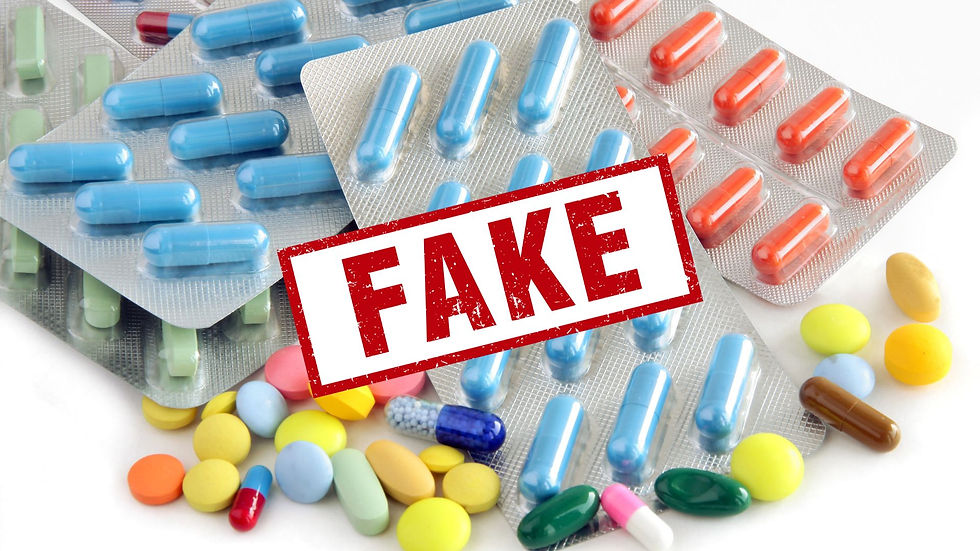
Researchers from Frontier of Pharmacology published a study in the National Library of Medicine, examining residents' perceptions in Mexico City and its metropolitan area regarding counterfeit medicines and the risks of purchasing drugs from unauthorized sellers. Many individuals, trusting the packaging, unknowingly received counterfeit products instead of legitimate medications. This highlights the urgent need for greater awareness and caution among consumers to combat the dangers of counterfeit drugs.
Across the globe, from Mexico City to Beirut, from Bucharest to Lagos, an invisible health crisis is unfolding. Counterfeit medicines have become a multi-billion-dollar illicit industry. Yet, the vast majority of people, including the healthcare professionals entrusted with our care, remain dangerously unaware of the threat.
The Scale of a Hidden Crisis
The World Health Organization estimates that approximately 10.5% of medicines in low- and middle-income countries globally are likely substandard or falsified. In Mexico alone, the number of reported falsified drug types increased by 300% between 2019 and 2022. Commonly used medications, including aspirin, cold remedies, thyroid medications, and pain relievers, have all been targeted by counterfeiters.
This is not merely a problem for the developing world. Data from the Pharmaceutical Security Institute reveals a surprising trend: the United States reports the highest number of counterfeit medicine incidents globally. This doesn't necessarily mean more fake drugs circulate in America, as stronger reporting mechanisms contribute to the results. The true global scope remains largely invisible precisely because most incidents go unreported.
The Awareness Gap: A Failure Across the Board about Counterfeit Medicines
Perhaps the most alarming aspect of this crisis is not the counterfeits themselves, but the profound lack of awareness among those who should be our first line of defense.

Healthcare Professionals in the Dark
Healthcare providers, including doctors, nurses, and pharmacists, are meant to keep us safe from harmful medications. However, evidence shows they are often not ready for this responsibility and lack information about counterfeits. A survey conducted by the Johns Hopkins Bloomberg School of Public Health found that only 2% of healthcare professionals have been trained to identify substandard or falsified drugs, and more than 80% do not consider them a serious concern.
In Saudi Arabia, approximately half of pharmacists had never used the national vigilance system and lacked awareness of detection technologies. In Eritrea, 55.6% of healthcare professionals did not know how to report suspicious medicines, while 34.9% were unsure what to report. Even in Sweden, a country with a robust healthcare system, 72% of community pharmacists expressed a need for more knowledge about falsified medicines.
The consequences of this knowledge gap are stark. A recent study of Lebanese community pharmacists, conducted during the country's ongoing national crises, revealed a troubling disconnect. While 84.2% reported prior knowledge of counterfeit medicines and 54% had encountered such products, researchers found no correlation between theoretical knowledge and the practical ability to recognize counterfeit products. Pharmacists could answer questions correctly, but could not identify fakes when shown actual examples.
A Market Built on Deception and Demand
Why are counterfeiters so drawn to pharmaceuticals? The OECD report outlines a grim calculus: high profit margins, low risks of detection, weak penalties, and an all-too-easy ability to deceive consumers. Unlike counterfeit luxury goods, where the buyer might suspect a fake, purchasers of medicine believe they are buying genuine, life-saving treatment.
This deception has deadly consequences. The report notes that seized counterfeits are not limited to lifestyle drugs or painkillers. They include medications for serious diseases such as malaria, HIV/AIDS, and cancer, as well as antibiotics, diabetes treatments, and central nervous system medicines.
Why Visual Inspection No Longer Works
For generations, people have been told to check their medications, look at the packaging, examine the pills, and trust their instincts. This advice, however well-intentioned, has become dangerously obsolete.
Modern counterfeiters operate with pharmaceutical-grade equipment, using high-resolution printers, precision pill presses, and sophisticated packaging materials. They study genuine products in minute detail, replicating fonts, colors, holograms, lot numbers, and even the texture of boxes. Some counterfeits are so accurate that brand protection teams must use microscopes, spectral scanners, or specialized laboratory equipment to distinguish fakes from genuine products.
Many legitimate medicines incorporate authentication technologies that are deliberately invisible to the naked eye, such as microprinting, ultraviolet-reactive elements, and covert taggants in inks. However, patients cannot see these features, let alone verify them.
"When a safety feature becomes widely known, counterfeiters adjust quickly," explains a security expert. "A new public warning may describe one lookalike product, yet there may already be several updated versions that look completely different". This creates a constant arms race that consumers cannot hope to keep track of.
The uncomfortable truth is that even pharmacists and regulatory officials are sometimes fooled. Documented cases exist of counterfeit medications reaching hospitals and clinics where experienced professionals handled the packaging without realizing anything was wrong. In some instances, national authorities initially accepted counterfeit batches that later failed scientific testing.
Why Underreporting Perpetuates the Problem
The true scale of the counterfeit medicine crisis remains hidden because most incidents are never reported. Sean O'Hearen, founder and principal consultant at 1st Line Partners, identifies a crucial psychological barrier: consumer embarrassment.
"If you do go on to the internet or social media and you buy a medicine, you recognize, okay, something's wrong, either the packaging or you took it, and nothing happened," O'Hearen explains. "I think there's a reluctance to report that because you're almost embarrassed that you were scammed".
Beyond embarrassment, many people simply don't know where or how to report suspected counterfeits. Healthcare professionals face their own barriers: fear of repercussions from employers or manufacturers, difficulty identifying falsified products, and unclear reporting processes. In Tanzania and Indonesia, studies have found that fears of reputational harm discourage reporting.
This underreporting creates a vicious cycle. Without accurate data, regulators cannot identify emerging threats. Without documented incidents, healthcare professionals remain complacent. Without public awareness campaigns informed by real cases, consumers continue to trust their instincts rather than verified sources.
What Can Be Done?
The challenge of counterfeit medicines is formidable, but solutions are emerging across multiple fronts.
Education Reform
The Johns Hopkins Bloomberg School of Public Health has begun holding symposia on substandard and falsified drugs, bringing together researchers, policymakers, and industry leaders. The BESAFE project offers actionable recommendations, including integrating counterfeit medicine awareness into undergraduate curricula for healthcare students, establishing dedicated modules in medical schools, and expanding continuing education for practicing professionals.
Technological Solutions
New technologies offer hope for bridging the awareness gap. Blockchain systems can create immutable records of every step in the supply chain, enabling secure traceability and easy verification of drug authenticity. Artificial intelligence and machine learning can analyze vast amounts of data from sales networks, distribution channels, and consumer reports to detect anomalies indicating counterfeit activity.
Innovative approaches like the TrueMed AI app use visual forensics to detect microscopic patterns on packaging that counterfeiters cannot perfectly replicate—details invisible to the human eye but recognizable to machine learning algorithms. Such technologies work with existing packaging and require no manufacturer changes, offering a practical solution for authenticating medications at the point of use.
Public Awareness Campaigns
Organizations, including the "Fight the Fakes" campaign, the Partnership for Safe Medicines, and regulators worldwide, are developing programs to inform the public about counterfeit medicine risks. The European Federation of Pharmaceutical Industries and Associations has even partnered with TikTok to reach younger consumers, warning that "fake medicines are everywhere online, and they're dangerous".
(Image courtesy of World Heart Federation, world-heart-federation.org)
Their message is simple but crucial: real medicines are not sold on social media platforms. Consumers should only purchase medications from verified pharmacies and report suspicious online sellers.
Regulatory Coordination
Strengthening pharmacovigilance systems globally is essential to identifying counterfeit medicines and quantifying their impact. International partnerships among regulatory agencies, pharmaceutical companies, and organizations like the WHO can facilitate cross-border sharing of data on counterfeit incidents.
The implementation of ISO IDMP standards and the global Pharmaceutical Product Identifier promises to enable consistent, cross-border identification of medicinal products, improving traceability and supporting faster safety alerts.
A Call to Action
The path forward requires humility about the limits of individual vigilance and ambition about what collective action can achieve. It demands that we stop treating counterfeit medicines as a problem of consumer awareness and start treating it as what it truly is: a systemic failure requiring systemic solutions.
For consumers, the message is not "learn to spot fakes"—an impossible task—but rather "know your sources." Purchase medications only from licensed pharmacies with verified supply chains. Be skeptical of online sellers offering deep discounts or no prescription requirements. Report suspicious products even if you're embarrassed.
For healthcare professionals, the imperative is to demand training, to remain vigilant, and to report suspicions without fear. The Lebanese pharmacists who recognized their own limitations, who acknowledged that knowledge alone did not equip them to identify fakes, have pointed the way toward the hands-on training and technological support that professionals everywhere need.
For policymakers and industry leaders, the call is to invest in education, technology, and coordination—to recognize that the fight against counterfeit medicines is not a cost but an investment in public health and trust.
The counterfeiters are not waiting. They are evolving, adapting, and expanding their reach into new markets and new products. The question is whether our awareness, our systems, and our commitment can evolve fast enough to catch up.
Let's stay one step ahead of counterfeiters and protect the brands that matter most!
Please reach out to us today for further information regarding our services.
Article References:


Comments