
Not Just Luxury Products: The Most Surprisingly Counterfeited Products in Today's Global Market
Updated: Apr 29

For years, the conversation around counterfeiting has centered on luxury handbags, designer watches, and high-end apparel, items that, while costly, pose a limited direct threat to physical safety.
That narrative is dangerously outdated. Today’s counterfeiters have shifted their focus to a far more unsettling target that has garnered less attention: the everyday products we put in our bodies, on our eyes, and use to protect our children. From contact lenses and toothpaste to motorcycle helmets and infant car seats, a new wave of dangerous fakes is flooding global markets, and the consequences can be fatal.
Perhaps most alarming is that these hazardous imitations are increasingly appearing on mainstream e-commerce platforms and in street markets. There, consumers let their guard down, mistakenly believing that a website’s legitimacy guarantees a product’s authenticity. However, as law enforcement agencies and health experts warn, the real price of these bargains is often measured in hospital visits, chronic illness, and preventable deaths; far beyond the figure at checkout.
👁️ Contact Lenses: A Real Risk of Eye Damage and Blindness

(Image courtesy of U.S Customs and Border Protection, https://www.cbp.gov/)
Counterfeit contact lenses, often sold as cosmetic "circle lenses” or bargain alternatives to prescription brands, are among the most deceptive and dangerous products on the market. Unlike FDA‑approved lenses, these fakes are manufactured in non‑sterile environments using low‑quality, toxic materials.
Studies conducted by the FDA’s Forensic Chemistry Center found that 60% of counterfeit lenses tested positive for microbial contamination, with nearly half of all non‑corrective lens samples showing evidence of harmful bacteria. The risks are severe: corneal ulcers, bacterial infections, and permanent vision loss. As one ophthalmologist warned, “Even for one hour, if you put a counterfeit or unapproved contact lens in, you could cause severe, irreversible damage to your eye.”
Toothpaste: Hidden Poisons in Your Bathroom

Counterfeit toothpaste may seem like a low-risk, minor inconvenience, but laboratory analyses have revealed a far more sinister reality. Tubes falsely labeled as leading brands have been found to contain diethylene glycol (DEG), a toxic industrial solvent used in antifreeze. Ingestion of DEG can cause nausea, abdominal pain, kidney failure, convulsions, and even death. In addition to chemical toxins, counterfeit toothpaste has been found to carry high levels of harmful bacteria that can lead to gastrointestinal illness, lung infections, and blood poisoning. Health professionals have advised consumers who encounter such products to “discontinue use immediately and not to use their toothbrush.”
Helmets: A Liability Disguised as Safety Gear
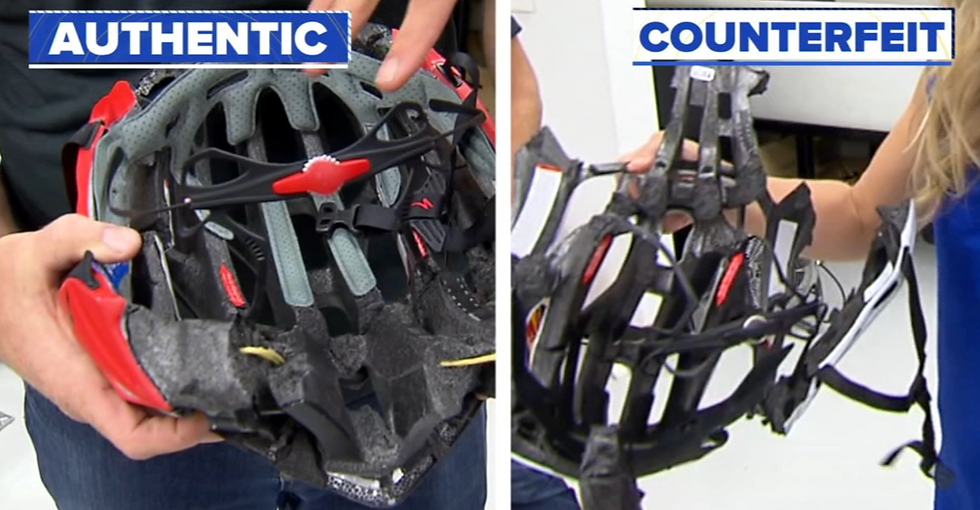
A helmet that shatters on impact is worse than no helmet at all; it offers a false sense of security. Yet that is exactly what happens with counterfeit helmets. In a 2025 seminar in Vietnam, simulation experiments showed that fake helmets “shattered upon impact, with almost zero protection.” Similarly, a Jamaican expert demonstrated how a genuine Arai helmet (worth US$500–$600) provides life‑saving protection, while a counterfeit version sold for just US$50 “shatters under impact, offering no real safety.” A Consumer Reports investigation found bike helmets sold on major e‑commerce sites that lacked the required safety compliance labels, meaning they did not meet basic US safety standards. As one expert bluntly stated, “a fake helmet is a death trap disguised as safety gear.”
Car Seats: When “Savings” Risk a Child’s Life

Counterfeit infant car seats represent one of the most chilling examples of the counterfeit epidemic. Nurses at a Florida hospital recently flagged two counterfeit car seats brought in by new parents, both purchased online from what they believed were trusted retailers. These products lacked federally approved restraints, chest clips, and proper energy‑absorbing padding. The New York Department of State’s Division of Consumer Protection issued a warning stating that counterfeit car seats put babies’ and children’s lives at risk due to “lack of proper testing, inadequate safety features, and poor construction.” In a crash, these seats can shatter or collapse, offering no protection to the child. “The money saved on an illegitimate car seat is never worth the cost of a child’s life,” said New York Secretary of State Walter T. Mosley.
Cosmetics & Beauty Products: A Chemical Cocktail on Your Skin

The counterfeit beauty market is one of the fastest‑growing segments of the fake-goods industry. Testing of counterfeit setting sprays, serums, and moisturizers has revealed the presence of carcinogenic substances such as beryllium oxide, banned heavy metals including arsenic, lead, and mercury, and clear indicators of unsanitary production conditions. The health risks are significant: allergic reactions, chemical burns, infections, and long‑term skin damage. Counterfeit perfumes often fail to declare allergens, putting consumers at further risk, while fake makeup has been linked to burns and serious skin irritation.
Pharmaceuticals: When Medicine Becomes Poison
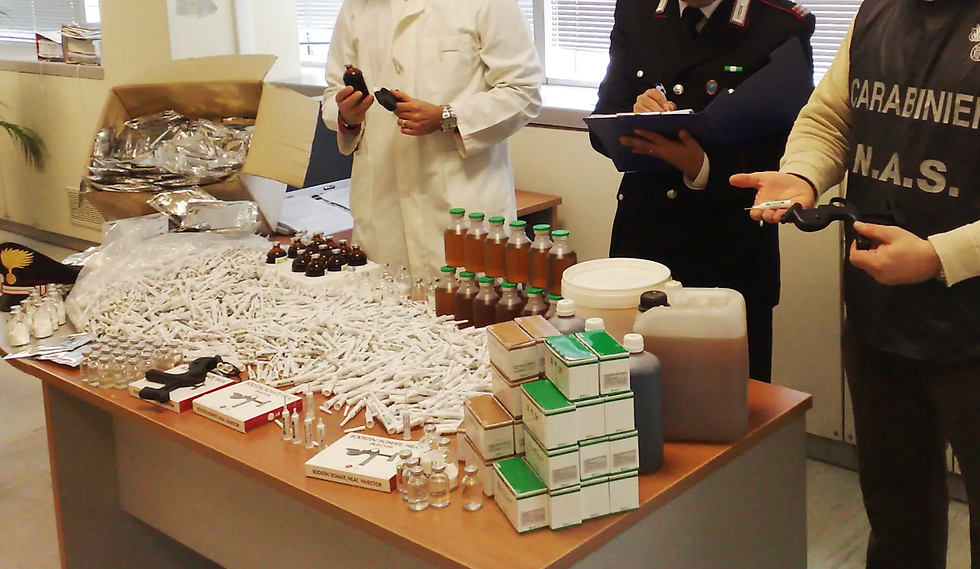
Perhaps the most terrifying category of all is counterfeit medicine. Europol’s Operation SHIELD VI (April–November 2025) led to the seizure of €33 million (approximately US$38.6 million) worth of counterfeit medicines and illegal supplements across 30 countries. The operation uncovered how organized crime networks exploit the growing demand for weight‑loss drugs, performance enhancers, and recreational substances, including fake products containing dangerous synthetic opioids like nitazenes.
In the UK, the MHRA warned about sophisticated fake Mounjaro injection pens dispensed by an online clinic; faulty pens had dose knobs detaching during use. Authorities have repeatedly warned that these illegally produced medicines pose serious health risks and are often marketed to vulnerable consumers seeking treatments outside regulated healthcare channels.
The E‑Commerce Connection: A Fertile Ground for Fraud
The rapid growth of online shopping has provided counterfeiters with unprecedented access to consumers. As a joint statement from the European Anti‑Fraud Office (OLAF) and the EU Intellectual Property Office (EUIPO) noted, “E‑commerce has revolutionised shopping, but it has also created a fertile ground for fraudsters to push fake and unsafe goods into the market.” The relative anonymity and speed of digital transactions make it uniquely difficult to track and prosecute offenders.
Major platforms, including Amazon, Alibaba, Temu, and Shopee, have been identified as channels through which counterfeit products are sold. The U.S. Trade Representative’s 2025 Review of Notorious Markets for Counterfeiting and Piracy identified 37 online markets and 32 physical markets that facilitate substantial trademark counterfeiting or copyright piracy. The report specifically highlighted that these counterfeit goods “can present health or safety concerns” to consumers.
Consumers often trust these platforms implicitly as they would a purchase directly from the brand, assuming that a product sold through a major website must be authentic. For an increasing number of customers, that assumption is tragically misplaced. Counterfeiters are adept at creating convincing storefronts, stealing product imagery, and disappearing overnight. Social media “flash sales” and unverified influencers promoting deals that seem too good to be true are common red flags. As one neonatologist caring for infants endangered by counterfeit car seats put it, “Scammers are taking advantage of new parents during a vulnerable and emotional time, and the result is putting our most precious patients at risk.
STU: Stopping Counterfeits at the Source
While the scale of the problem is daunting, there are organizations dedicated to fighting back. STU (Selective Trademark Union) specializes in what it calls “out‑of‑the‑box, tailor‑made solutions attacking the source of counterfeits: manufacturers, assemblers, and warehouses.” With more than 40 years of enforcement experience in Asia and over 2,000 enforcement operations under its belt each year, STU has become a trusted partner for brands seeking to protect both their intellectual property and their customers.
STU’s approach is fundamentally different from the reactive, takedown‑based methods employed by many online platforms. Rather than simply flagging individual listings or sellers—a process that is often too slow to prevent harm, STU conducts field investigations to trace counterfeit products back to their manufacturing source.
Once identified, STU works directly with local authorities to execute raids, shut down production facilities, and bring counterfeiters to justice. The organization conducts approximately 50 raids each day across Asia and counts numerous well-known brands among its customers.

A notable example of STU’s effectiveness involved German fan manufacturer Elektrobau Mulfingen GmbH & Co. KGaA (“ebm-papst”). After receiving a complaint from a customer about suspicious products, the company enlisted STU to investigate. STU traced the counterfeit fans through an intricate supply chain to a factory in Foshan, Guangdong. A raid led by local authorities, with STU’s assistance, resulted in the confiscation of 149 fans, 260 counterfeit labels, and the imposition of fines. Vice President of Intellectual Property at ebm-papst, Ralf Duckeck, stated: “I am extremely satisfied with the cooperation with STU. It was the best decision for me to work with STU in the fight against counterfeiting in China.”
STU’s mission goes beyond safeguarding brand reputation: “Counterfeit products can pose a health and safety risk, putting consumers and IP holders at legal risk.” By targeting the manufacturing sources of dangerous fakes, STU helps remove hazardous products from the market before they reach consumers.
Conclusion: A Call for Vigilance and Action
The counterfeit landscape has transformed dramatically. The knock‑off handbag of the past has given way to contaminated contact lenses, toxic toothpaste, and car seats that crumble in a crash. These products do not merely cheat consumers out of money, they endanger lives.
E‑commerce platforms have become the primary vector for this new wave of dangerous fakes, yet platform accountability remains inconsistent. While some companies have begun to strengthen seller verification and monitoring, counterfeiters continue to exploit loopholes and adopt artificial intelligence faster than the platforms can respond.
For consumers, the first line of defense is skepticism. Deals that seem “too good to be true” almost always are. Purchasing directly from authorized retailers or manufacturer websites, checking for safety certification labels, and being wary of unfamiliar online marketplaces are essential habits. For brands, partnerships with dedicated anti‑counterfeit organizations like STU offer a proven path to protect customers and shut down illicit supply chains at their source.
The fight against dangerous counterfeits is far from over. But by recognizing the threat, demanding accountability from online platforms, and supporting organizations that target the root of the problem, we can begin to turn the tide and ensure that the products we trust to keep us safe actually do.
Let's stay one step ahead of counterfeiters and protect the brands that matter most!
Please reach out to us today for further information regarding our services.
Article References:


Comments